
Blog
Three glasses in front of you. One catches your attention, another feels familiar, and a third becomes more interesting with food. A few simple questions can help you understand why.
27 October 2026 · By the Cinque team
Begin with one question
Comparing Greek and international wines is easier when you decide what you want to notice. You might explore the aromas of white wines, the texture of reds, or the way a Greek cheese changes your impression of a glass.
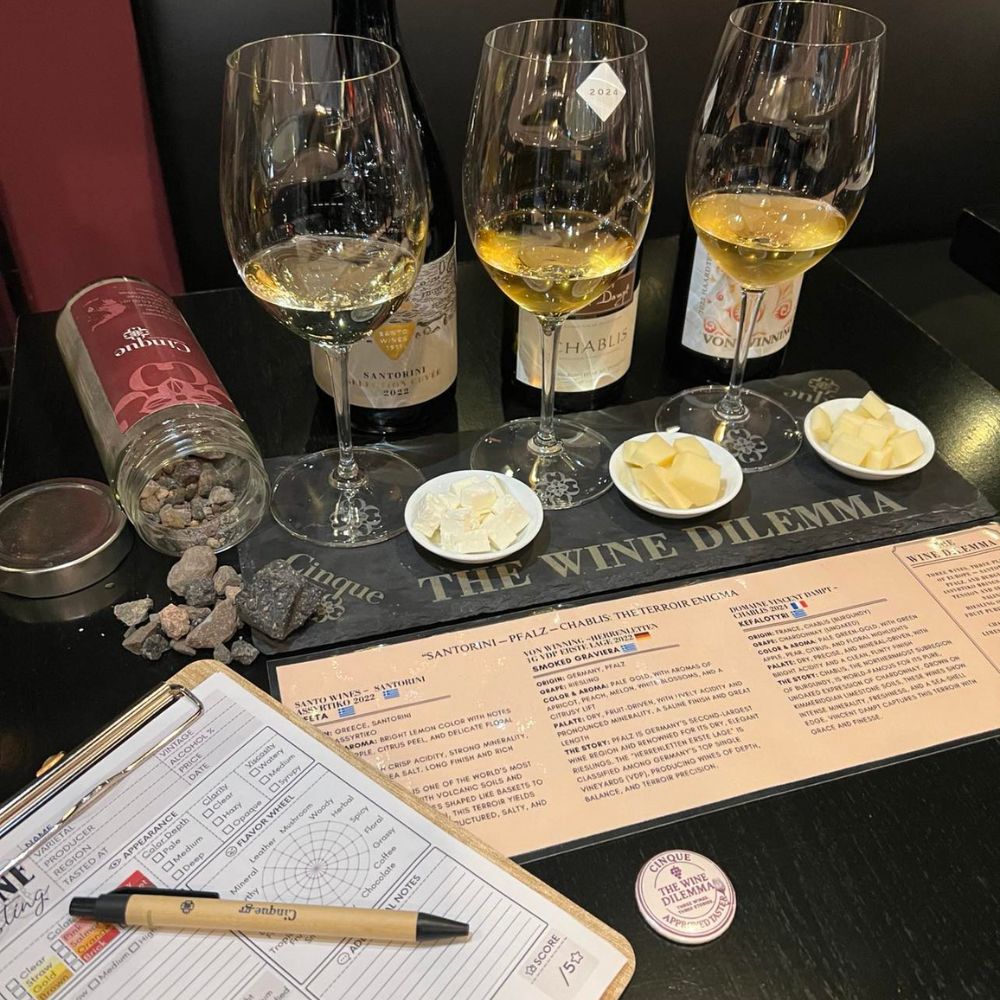
At Cinque, Wine Dilemma brings wines from Greece and other wine regions into the same tasting. This guide gives you a practical way to approach that comparison, one observation at a time. The particular wines depend on the themed journey you choose.
Give each glass the same attention
Keep the glasses in a clear order and begin with a small taste of each wine on its own. Smell each glass before tasting, then return to it after a gentle swirl. Use words you recognise from everyday life: lemon, ripe pear, flowers, dried herbs or spice.
Start with a broad impression. If “citrus” feels right, write that down. A short note that means something to you will be useful when you return to the wine later.
Separate aroma from the way a wine feels
A wine can smell intensely fruity while tasting dry. Alongside its aromas, pay attention to a few sensations:
- Acidity: notice how much the wine makes your mouth water.
- Body: consider its weight in your mouth. Does it feel light, medium or full?
- Tannin: especially with red wines, look for a drying or gripping sensation around your gums.
- Finish: notice which flavours remain after the sip.
Try comparing just one feature across all three glasses. Which feels freshest? Which has the fullest texture? Your first preference may become easier to explain.
Taste with the cheese, then revisit your first note
Take a small bite of the cheese paired with a wine, then taste that wine again. Pay attention to anything that seems different: the fruit, the freshness, the texture or the flavours that linger.
Write one sentence before the pairing and one afterwards. For example, your note might read “fresh and citrusy on its own” followed by “the fruit feels more noticeable with the cheese”. This is an example of how to record an impression, rather than a result to expect from every pairing.
You may prefer one wine on its own and another alongside the food. Both observations help you understand what you enjoy.
Bring the label back into the conversation
Once you have a first impression, look at the grape, region and producer with your host. Ask what connects the wines in your chosen journey and what makes each bottle different.
Keep your conclusion specific to the glasses on the table. “I preferred this wine with this cheese” is a useful discovery. One tasting cannot describe every wine made in a country or from a grape variety.
If a Greek grape is new to you, our guide to Greek Wine School offers a way to continue exploring after your visit.
Put the comparison into practice at Cinque
The Wine Dilemma includes three wines of 75 ml each from Greece and international wine regions, three Greek cheese pairings, tasting notes, regional information and a guided conversation. You have time to ask questions and develop your own impressions.
Classic and Premium follow the same three-glass format with different wine selections. You can read about the two options in our introduction to Wine Dilemma, then choose the journey that interests you.
Keep one final note: which wine would you like to return to, and what made you choose it? That is a useful starting point for your next Greek wine discovery.
Tasting foundations: WSET, Wine tasting information and How to train your palate.